
 Available in US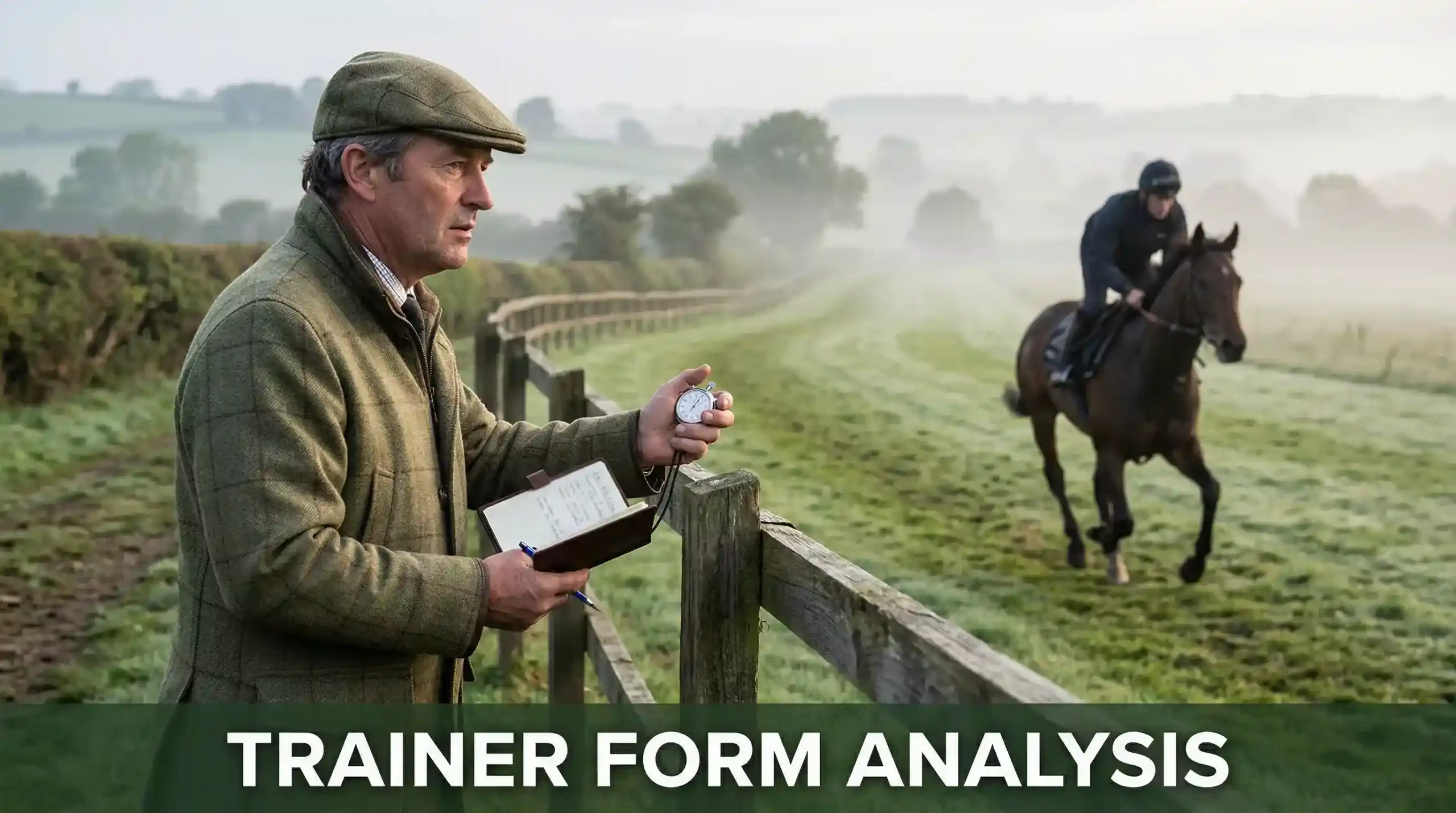
Trainer form analysis reveals patterns that horse-by-horse assessment often misses. Yards operate as units—shared training regimes, common approaches to race placement, and collective health that affects multiple runners simultaneously. When a stable hits form, winners cluster. When problems emerge, the entire string can underperform for weeks. Reading these patterns before the market fully adjusts creates genuine betting opportunities.
The concentration of quality horses among leading trainers shapes British racing’s competitive landscape. According to the British Horseracing Authority’s 2024 Racing Report, the number of jump horses rated 130 or higher declined from 787 to 716—a drop of 9.0%. This contraction at the elite level means fewer trainers handling top-class jumpers, making yard-level analysis increasingly relevant for identifying where quality concentrates.
Trainers also exhibit consistent tendencies. Some target specific festivals methodically; others specialise in particular race types or distances. First-time-out performance varies dramatically between yards, as do strike rates with horses returning from breaks. Understanding these patterns transforms generic statistics into predictive tools.
This guide covers essential trainer metrics, seasonal pattern recognition, and practical methods for tracking stable form. Applied systematically, trainer analysis adds a dimension of insight that pure horse-focused assessment cannot replicate.
Reading Trainer Patterns
Trainer statistics segment into categories that reveal distinct competencies. Aggregate figures provide baseline assessment; segmented analysis uncovers actionable patterns the market may underweight.
Seasonal Performance Cycles
Many trainers demonstrate consistent seasonal patterns. Flat yards targeting Royal Ascot peak in mid-June; jumps trainers aiming for Cheltenham hit form in late February and March. Others prioritise autumn campaigns or all-weather winter programs. Knowing which trainers target which periods reveals when to trust their runners more heavily.
The BHA’s 2024 data shows Flat Premier race day average field sizes increased to 10.86 runners, indicating competitive racing that rewards precise timing. Trainers who peak at intended moments extract more from their horses than those running into form gradually.
First-Time-Out Statistics
Debut performance varies dramatically between yards. Some trainers routinely win with debutants, indicating thorough preparation and accurate assessment of readiness. Others use first runs educationally, expecting improvement for subsequent starts.
These patterns create betting opportunities in opposite directions. Back well-fancied debutants from yards with strong first-time-out records. Be cautious about newcomers from trainers who historically require a run. Oppose short-priced debutants from yards where improvement typically follows initial experience.
Distance and Race-Type Specialisation
Trainers develop expertise in specific race categories. Sprint specialists understand speed training; stayers experts know how to build stamina. Handicap specialists place horses to exploit ratings effectively; conditions race trainers develop horses for class tests.
Check trainer statistics filtered by race type and distance before assessing individual runners. A trainer with a 20% overall strike rate might hit 30% in staying handicaps but only 10% in two-year-old conditions races. These variations inform confidence levels beyond headline figures.
Course Records
Geographical factors influence trainer performance. Local trainers know nearby courses intimately—track peculiarities, draw biases, and optimal race placement. Travelling stables face unfamiliar conditions and logistical challenges that can affect results.
However, leading trainers often overcome geographical disadvantages through superior horse quality. A top yard raiding a minor meeting may dominate despite course unfamiliarity. Weight trainer course records appropriately: meaningful for mid-tier yards, less significant for elite operations.
Trainer-Jockey Combinations
Stable jockey arrangements create data clusters worth tracking. Retained riders understanding a yard’s methods extract consistent results. Substitute jockeys on stable runners may underperform despite individual competence.
When a trainer uses an unusual jockey booking—especially engaging a top rider from outside their normal circle—the move signals belief worth investigating. These booking decisions often reveal intentions more clearly than public statements.
Recovery and Setback Patterns
Yards experiencing problems—illness, ground-related struggles, staff changes—often show collective underperformance before recovering together. Recognising these patterns early allows profitable positioning both during and after downturns.
Track recent results for trainers you follow regularly. A string of unexplained poor runs suggests temporary issues; consistent form suggests stable operation. When a struggling yard shows signs of recovery—a winner after several weeks of failures—subsequent runners often improve too.
Spotting Trainers in Form
Current form often matters more than long-term statistics. A trainer’s recent run predicts near-future performance better than career aggregates. Developing methods to monitor form across multiple yards creates ongoing betting intelligence.
Monitoring Recent Results
Track recent performance for trainers whose horses you frequently assess. A simple spreadsheet noting last-14-days results reveals hot and cold yards at a glance. Yards showing multiple winners or places signal positive momentum; extended barren runs suggest problems worth investigating before backing.
Brant Dunshea, CEO of the British Horseracing Authority, observed that there is undoubtedly an ever-growing desire for data among those consuming and betting on racing. This appetite extends to trainer form tracking—systematic punters increasingly leverage data tools that earlier generations lacked.
Identifying Turning Points
The first winner after a losing run often signals broader recovery. Trainers do not usually solve problems for one horse alone; improvements affect the whole yard. When a struggling stable breaks through, subsequent runners often show immediate improvement.
Conversely, a stable in excellent form that suddenly produces multiple disappointing runs may face emerging issues. Early recognition of these turning points—before markets fully adjust—creates both backing and opposing opportunities.
Festival and Big-Race Preparation
Major meetings require specific preparation. Trainers targeting Cheltenham typically bring horses to peak fitness in early March; Royal Ascot campaigns build through May. Watching warm-up races reveals which trainers are executing plans successfully.
A trainer whose intended festival runners are showing well in prep races deserves confidence when the main event arrives. One whose stars are disappointing in trials may be struggling to implement preparations. These signals clarify festival betting before prices fully reflect training yard reality.
Trainer News and Information
Pay attention to trainer comments in racing media. Statements about horse wellbeing, intended targets, and general yard news provide context for statistical patterns. A trainer explaining that illness has affected the string validates observed underperformance; optimistic comments amid poor runs might indicate denial rather than insight.
Do not take trainer comments at face value—self-interest colours public statements—but incorporate them as one information source among many. Consistent messaging matching observable results increases credibility; contradictions warrant scepticism.
Building Trainer Watchlists
Identify trainers whose patterns you understand well and follow their runners specifically. Deep knowledge of a dozen yards often outperforms surface awareness of hundreds. Your watchlist trainers become predictable; backing or opposing their runners becomes second nature.
Expand watchlists gradually as understanding develops. Rushing to cover too many trainers dilutes knowledge without proportionate benefit. Quality of insight trumps quantity of coverage.
See also Flat vs Jump Racing.
Making Trainer Analysis Work
Trainer form analysis provides a systematic edge that complements individual horse assessment. Yards operate as interconnected units where success and failure cluster meaningfully. Recognising these patterns—seasonal cycles, specialisations, current momentum—adds predictive power that isolated horse analysis cannot match.
Build trainer tracking into your regular routine. Monitor recent results for yards you follow closely, note turning points when form shifts, and investigate unusual patterns before markets fully adjust. This ongoing attention accumulates into practical knowledge that sharpens race-by-race decisions.
Balance trainer factors appropriately. Current stable form influences outcomes but does not override individual horse merit. A good horse from a struggling yard still holds chances; a moderate horse from a hot stable remains moderate. Use trainer analysis to adjust confidence levels rather than replace fundamental horse assessment. The combination of both approaches delivers stronger selections than either alone.
Trainer Form Analysis — More on this topic at live horse racing betting.
