
 Available in US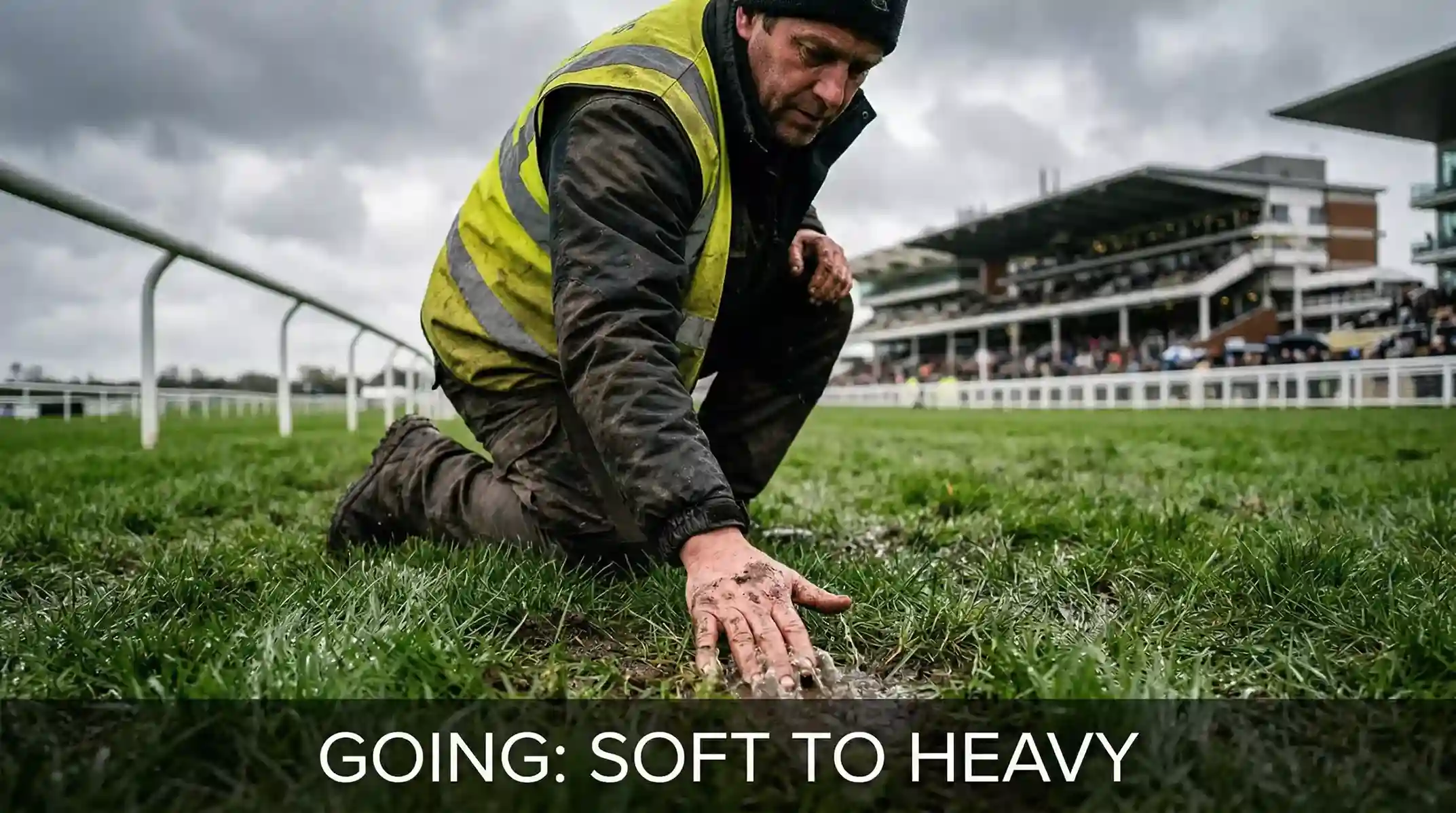
Going conditions shape horse racing outcomes more decisively than most casual punters recognise. The ground beneath a horse’s hooves affects action, stride length, energy expenditure, and ultimately race results. Some horses excel on fast, firm surfaces that allow them to bowl along efficiently. Others only find their best form when mud flies and stamina matters more than pure speed. Learning to read going conditions gives you an analytical edge that many bettors overlook.
The practical impact of going appears throughout industry statistics. According to the British Horseracing Authority’s 2024 Racing Report, the number of horses rated 130 or higher on the jumps fell from 787 to 716—a decline of 9.0%. Part of this drop reflects how extreme going conditions affect certain horse populations more than others. Heavy ground during winter months places particular stress on high-class jumpers, while drought conditions on the flat create different competitive dynamics.
Ground preferences develop over a horse’s career through accumulated evidence. A horse that has won three times on soft going but never finished better than fourth on firm ground holds clear preferences that shape its chances in future races. Recognising these patterns requires attention to going descriptions in past results and understanding what the official scale terminology actually means.
British racing employs a specific going scale that differs slightly from Irish conventions and significantly from American descriptions. Mastering this scale—and understanding how it interacts with course drainage characteristics, seasonal patterns, and individual horse preferences—provides foundation knowledge for any serious form student.
The Going Scale Explained
British racing uses a standardised scale ranging from hard at one extreme through to heavy at the other. Understanding what each description means—and how conditions can vary within a single meeting—allows you to interpret going reports accurately.
Firm to Hard Conditions
Hard going rarely appears on British racecourses, reserved for genuinely drought-baked surfaces that carry genuine injury risk. Firm ground represents the fastest end of typical racing conditions, where minimal moisture allows horses to cover ground quickly with little energy lost to surface penetration.
Horses built for speed tend to favour firm going. Lightweight types with quick actions excel when they can skip across the surface rather than slogging through it. However, firm ground also increases concussive stress on legs and joints, meaning injury-prone horses may be vulnerable despite possessing the right action for fast surfaces.
Good to firm sits slightly slower than firm, with just enough moisture to cushion the surface without creating any drag. Many trainers prefer good to firm as the ideal compromise—fast enough for racing merit to show, safe enough to protect horses’ legs.
Good Ground
Good going represents the middle of the scale and the most common racing surface across the British season. Neither particularly fast nor notably testing, good ground allows all running styles to compete on relatively equal terms. Horses without strong going preferences typically handle good ground comfortably.
Good ground can shade either direction within a meeting. “Good, good to firm in places” indicates predominantly ideal conditions with faster patches, perhaps on higher ground or well-drained sections. “Good, good to soft in places” suggests slightly more moisture, potentially softening further if rain arrives. These place-specific variations matter for horses with marked preferences.
Soft to Heavy Conditions
Soft going introduces genuine testing conditions. Horses sink further into the surface with each stride, requiring more effort to maintain pace. Stamina becomes more important than pure speed, and race times slow noticeably compared to faster ground.
The BHA’s statistics on field sizes provide context here. Flat Premier race day average field sizes increased from 10.50 in 2023 to 10.86 in 2024, partly reflecting better ground management and scheduling that maintains suitable conditions. When going turns soft, some trainers withdraw horses rather than risk them on unsuitable surfaces, affecting field compositions.
Heavy going represents the most testing conditions, where significant waterlogging creates demanding surfaces that only true mudlarks appreciate. Races run on heavy ground often produce unexpected results as specialists outperform superior rivals who simply cannot cope with the conditions.
The Going Stick
Clerks of courses use the GoingStick—a standardised measuring device—to provide objective readings alongside verbal descriptions. The stick measures penetration resistance and produces numerical scores that add precision to subjective assessments.
GoingStick readings above 7.0 indicate firm ground, while readings around 6.0-7.0 suggest good conditions. Below 6.0, the ground softens progressively, with readings below 5.0 representing genuinely soft surfaces. These numbers appear on racecourse and bookmaker websites, allowing punters to track conditions objectively.
Changes During a Meeting
Going evolves throughout a race day. Morning watering can ease firm ground toward good. Rainfall during racing softens conditions progressively, with later races potentially run on different ground than early contests. The tread of racing itself cuts up turf, meaning the going often rides slower as a meeting progresses.
Pay attention to going updates between races. Official descriptions may change from “good” in the morning to “good to soft” by afternoon if weather intervenes. Horses scheduled for later races may face different conditions than the declared going suggested when you placed your bet.
Finding Going Specialists
Some horses develop unmistakable going preferences that dramatically affect their chances depending on surface conditions. Identifying these specialists—and backing them when conditions suit—represents one of racing’s most reliable form angles.
Reading Past Performances
Form databases denote going conditions for each career run using abbreviated codes. A horse whose record shows wins on S (soft) and Hy (heavy) but poor efforts on GF (good to firm) and F (firm) clearly prefers testing ground. The pattern matters more than individual results—look for consistency across multiple runs rather than isolated performances.
Consider finishing positions alongside going codes. A horse that finished second on soft having won previously on heavy may simply have faced a better opponent rather than disliking the slight ground change. Context prevents over-interpretation of individual runs.
Pedigree Pointers
Breeding influences going preference through inherited physical characteristics. Certain stallion lines consistently produce offspring suited to particular conditions. Heavy-ground sires stamp their progeny with the powerful frames and determined attitudes that excel in testing conditions, while speed-oriented bloodlines produce horses better suited to faster surfaces.
First-time going experiments require pedigree consideration. A horse by a noted heavy-ground sire making its first start on soft ground has breeding to suggest competence even without previous form evidence. Conversely, a horse from a speed-oriented family trying soft ground for the first time may struggle despite good form on faster surfaces.
Physical Types
Visual assessment provides additional going clues. Tall, rangy horses often handle soft ground better than compact, speedy types—their longer stride and natural momentum carry through holding surfaces more efficiently. Heavily muscled horses tend to require firm ground that allows their power to translate into speed without the energy loss that softer surfaces create.
Action also tells a story. Horses with a high, round knee action tend to handle softer ground better than flat, daisy-cutting movers. The picking-up action extracts feet cleanly from soft surfaces, while low actions can lead to horses dwelling and losing momentum on testing ground.
Trainer Tendencies
Some trainers excel at placing horses on their preferred going. When these trainers run their horses, the going choice usually reflects genuine belief in conditions suiting. Other trainers enter horses wherever opportunities exist, making their going selections less informative. Learning which yards read going intelligently adds value to your form analysis.
Track selection offers similar insights. A trainer with multiple engaged horses who sends one specifically to a meeting expected to have soft ground while running others at faster-ground venues demonstrates purposeful placement. These pattern-based observations accumulate into useful knowledge over time.
See also Tricast & Forecast Bets.
Putting Going Analysis into Practice
Going conditions offer one of racing’s most objective form angles. Unlike assessments of jockey ability or trainer intent, ground conditions exist as measurable facts that affect race outcomes in predictable ways. Horses with demonstrated going preferences will likely maintain those preferences; backing them on suitable surfaces and opposing them on unsuitable ground represents straightforward profitable thinking.
Build going analysis into your standard race assessment process. Check the going report before examining runners, then filter the field based on surface suitability before evaluating other factors. This approach prevents wasted analysis on horses unsuited to prevailing conditions regardless of their general merit.
Track going changes actively on race days. Morning conditions can differ substantially from afternoon reality, particularly during unsettled weather. Bookmakers adjust odds when going changes, but markets do not always fully price ground shifts. Staying informed about evolving conditions creates opportunities to find value before markets fully adjust. Going Conditions in Horse Racing — More on this topic at live horse racing betting.
