
 Available in US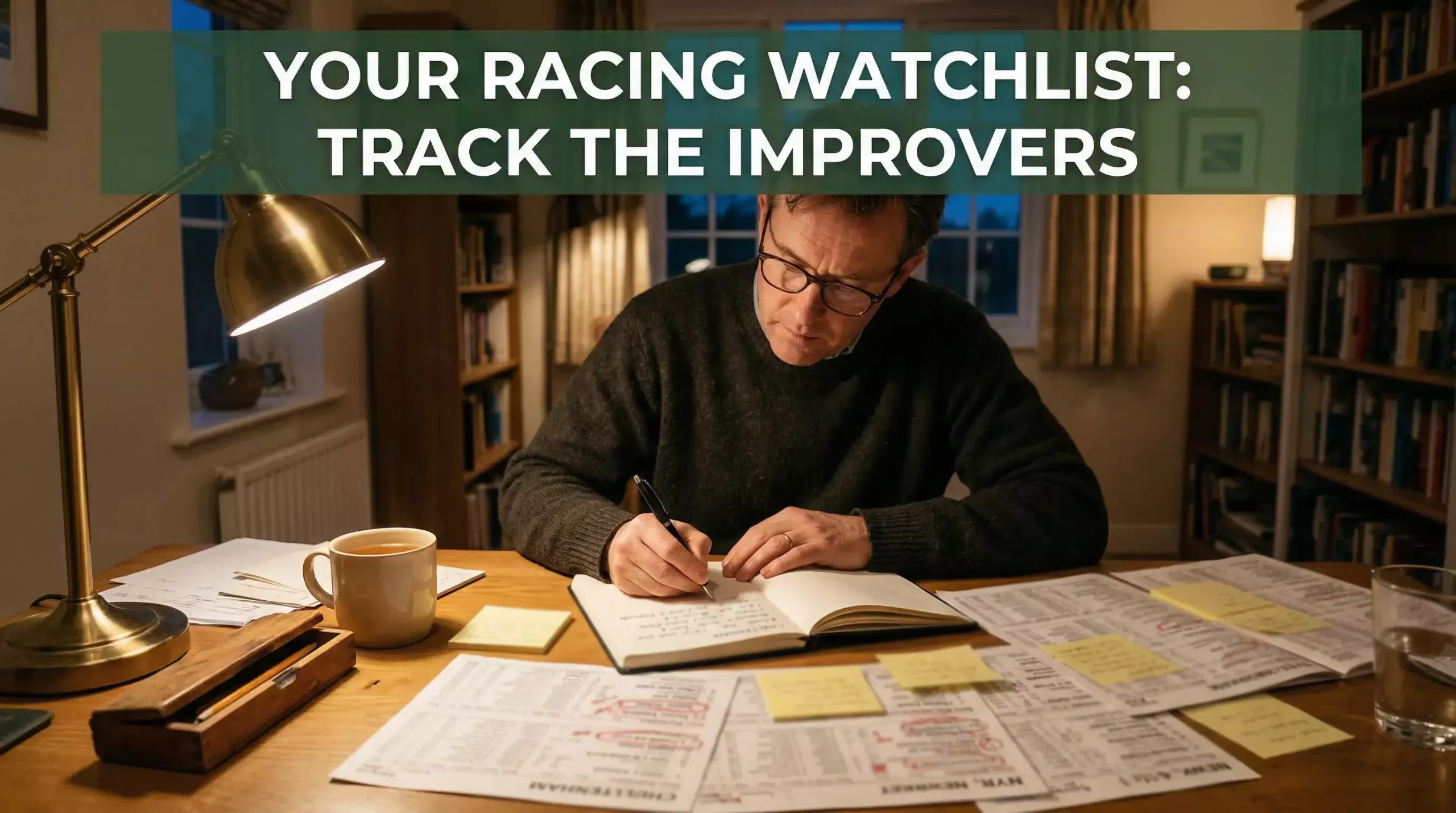
A racing watchlist transforms casual observation into systematic opportunity identification. By noting horses whose performances suggest future improvement—whether through unlucky defeats, promising debuts, or circumstances that masked true ability—punters create personalised databases of potential value bets. This proactive approach captures opportunities before markets adjust, delivering edge that reactive betting rarely achieves.
Quality horse populations provide ample watchlist material. According to the BHA Racing Report 2024, horses rated 85 or higher on the flat increased by 3.5%, indicating growth in the competitive horse population that rewards systematic tracking. More quality horses mean more situations where watchlist discipline identifies value before broader market recognition.
Watchlists work because markets primarily price recent form. Horses whose last run disappointed for explicable reasons attract less support than their genuine ability warrants. If you noted why that run disappointed—ground unsuitable, traffic problems, wrong distance—you recognise when conditions align better. The market sees a recent loser; you see circumstances corrected.
This guide explains what to track, how to organise watchlist information, and practical methods for converting noted horses into profitable betting selections when appropriate opportunities arise.
What to Track
Effective watchlists capture specific information that predicts future improvement. Vague notes like “looked promising” prove useless months later; precise observations about conditions and performance enable actionable betting decisions.
Unlucky Losers
Horses suffering bad luck in running deserve immediate watchlist inclusion. Traffic problems, being carried wide, interference at crucial moments—all can cost races that ability would otherwise have won. Note the nature of the bad luck, the margin of defeat, and the performance level shown before misfortune struck.
Be honest about what constitutes bad luck versus excuses. A horse that failed to quicken when asked did not suffer bad luck; it lacked ability at that moment. Genuine bad luck involves external factors preventing the horse showing its true capability.
Wrong Conditions
Horses running on unsuitable ground, at wrong distances, or against inappropriate opposition often show glimpses of ability that full expression would amplify. A confirmed soft-ground horse struggling on fast ground still merits noting if its earlier soft-ground form suggests talent. When ground conditions return to suitable, the watchlist triggers action.
Track which conditions each noted horse requires. Generic “needs softer ground” notes help less than specific observations: “ran well on heavy ground at Haydock, struggled on good to firm here—wait for genuine soft.” This precision enables confident selection when conditions align.
Promising Debuts
First-time-out performances often reveal more than finishing positions suggest. A horse finishing sixth but running green, showing inexperience while displaying physical ability, may improve dramatically for the experience. Note debut manner, not just result—how did the horse behave, move, finish?
The BHA report showed horses rated 130 or higher over jumps declined by 9.0%, reflecting attrition among elite performers. Identifying emerging talent through debut watching helps spot future stars before they join elite ranks and attract appropriate market attention.
Trip Requirements
Horses running over inadequate distances display characteristic patterns—running out of stamina when stepped up, or failing to see out trips where breeding suggests they should stay. Noting apparent distance requirements helps identify when future entries match trip profiles.
Watch for stamina signals in staying races and speed signs in shorter events. A horse staying on strongly suggests longer trips would suit; one quickening impressively but fading late might want shorter. These observations guide future betting when race conditions match observed requirements.
Fitness Notes
Horses returning from breaks or appearing ring-rusty in seasonal debuts often improve markedly for the outing. If a horse “needed the run” in your judgment—showing promise but lacking peak fitness—note this for monitoring subsequent runs when fitness should have sharpened.
Trainer and Yard Patterns
Note horses from yards you know target specific race types or times of year. A horse from a yard that typically peaks horses for autumn handicaps deserves watchlist inclusion when running moderately in summer, with autumn races flagged as potential opportunities when the trainer’s targeting pattern suggests improvement is planned.
Equipment and Tactical Changes
Horses trying headgear for the first time, switching to different jockeys, or attempting new tactics deserve notation regardless of immediate results. If first-time blinkers produce a better performance despite defeat, the equipment change may indicate trainer efforts to unlock improvement. Note what changed and how the horse responded.
Track which trainers achieve success with equipment changes specifically. Some yards consistently improve horses through headgear additions; others rarely see such interventions work. This pattern recognition helps prioritise which equipment-change notations deserve most attention.
Physical Appearance
If you attend race meetings or watch paddock coverage carefully, note horses who looked exceptionally well or poorly relative to their performance. A horse who ran moderately despite looking magnificent may have been unsuited by conditions rather than declining physically. Conversely, one who performed creditably despite appearing below par might improve when fitter.
Using Your Watchlist
A watchlist provides value only when consulted before betting decisions. Systematic review processes ensure noted horses receive attention when conditions align with observations.
Daily Race Card Review
Before each day’s racing, check entries against your watchlist. Sort by meeting or scan alphabetically—whichever method ensures you catch watchlisted runners. This daily discipline captures opportunities that casual race card scanning misses.
When watchlisted horses appear, review your original notes. Do current conditions match what you identified as favourable? Has anything changed since the noting run? If conditions align and nothing negative has emerged, the watchlist has delivered an actionable opportunity.
Prioritising Opportunities
Not every watchlist runner warrants betting. Assess how strongly conditions favour the horse, how compelling your original observation was, and whether market prices offer value relative to likely chances. Strong alignment across these factors elevates selections above weaker matches.
Accept that some noted horses will never present ideal opportunities. Conditions may never align, or horses may deteriorate rather than improve. Watchlists identify potential; they cannot guarantee future performance.
Updating and Maintaining
Review watchlists periodically to remove horses whose circumstances have changed. Long-absent horses may have lost ability; horses whose trigger conditions have passed without success may no longer represent value. Clean watchlists focus attention on genuinely relevant opportunities.
Add performance updates when watchlisted horses run. Whether they win, confirm your observations, or prove disappointing, recording outcomes improves future noting accuracy. Learning which patterns predict improvement—and which mislead—sharpens watchlist quality over time.
Format and Organisation
Choose a format that suits your working style. Spreadsheets allow sorting and filtering; notebooks enable detailed observations; apps provide portability. The best format is whichever you will actually use consistently. Elaborate systems abandoned after weeks help less than simple methods maintained permanently.
Include at minimum: horse name, date noted, why noted, conditions required, and any trigger races or timeframes. Additional detail helps but becomes counterproductive if it discourages regular updating.
See also Racing Post & Form Resources.
Making Watchlists Work
Racing watchlists convert observation into opportunity when maintained with discipline and consulted systematically. The edge comes not from magical insight but from organised attention to information the market briefly knows then forgets. When you remember what casual punters have forgotten, you identify value they overlook.
Start watchlisting today. Note one horse from today’s racing whose performance suggested future improvement under different conditions. Review tomorrow’s cards against that single entry. Build the habit before expanding the scope; consistency matters more than comprehensiveness initially.
Track your watchlist results honestly. Which noting patterns lead to winners? Which observations mislead regularly? This feedback refines your noting criteria, improving watchlist quality through evidence rather than assumption. Over seasons, systematic tracking becomes a genuine edge that compounds through accumulated learning about which situations reliably predict improvement. Building a Racing Watchlist — More on this topic at live horse racing betting.
