
 Available in US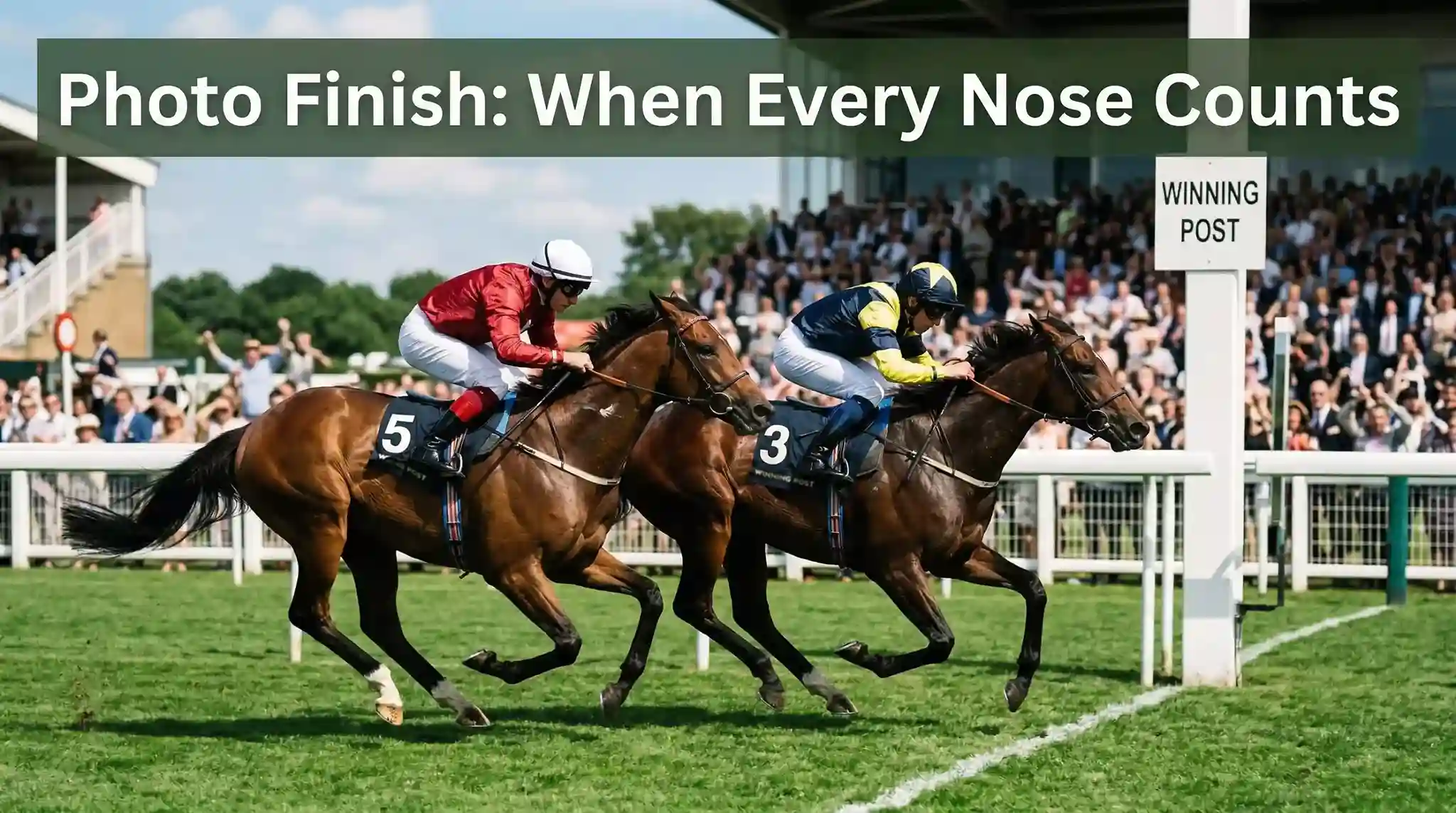
A photo finish occurs when horses cross the line so closely that naked-eye judging cannot determine the winner. Modern racecourses use sophisticated camera technology to capture exact finishing positions, producing the iconic strip images that reveal margins measured in fractions of inches. Understanding how photo finishes work—and crucially, how dead heats affect betting settlements—prepares punters for outcomes that transform expected returns in ways that catch the unprepared off guard.
Competitive racing makes close finishes increasingly common. According to the BHA Racing Report 2024, Flat Premier race day average field sizes reached 10.86 runners, creating crowded finishes where multiple horses often contest the frame simultaneously. More runners competing closely increases photo finish frequency and occasional dead heat declarations that affect betting settlements.
Dead heats—when two or more horses genuinely cannot be separated—trigger specific settlement rules that halve stakes on affected selections. Punters who understand these rules before they apply avoid confusion when returns differ from expectations. The mathematics prove straightforward once explained, but surprise dead heat settlements frustrate those encountering them unprepared for reduced payouts.
This guide explains photo finish technology, covers dead heat settlement calculations for various bet types, and clarifies how these outcomes affect each-way wagers, accumulators, and other complex betting structures.
How Photo Finishes Work
Photo finish technology has evolved from basic strip cameras to sophisticated digital systems capable of separating horses by millimetres. Understanding the technology helps appreciate just how close finishes can be before dead heats occur.
Strip Camera Technology
Photo finish cameras capture images differently from conventional photography. Rather than taking single snapshots, they record continuous strips as horses pass the winning line. This strip format means the image shows exactly when each horse’s nose crossed the line, regardless of body position or stride phase.
The resulting image appears stretched horizontally, with horses shown in sequence according to their finishing positions. Vertical lines on the image represent the exact winning line position, allowing judges to determine precisely which nose crossed first.
Margin Measurement
Modern systems measure winning margins to hundredths of a second at the line. These measurements translate to physical distances—a nose, a short head, a head, a neck—that commentators and form records use to describe finish closeness. Margins under a nose occasionally prove impossible to separate even with camera evidence.
The BHA’s 2024 data showed total horse population declining by 1.0%, but competitive racing quality remains high with close finishes reflecting well-matched fields rather than runaway victories.
Judge’s Decision Process
When finishes appear close, the judge calls for a photo. Racing pauses while officials examine the camera image, often magnifying sections to determine precise positions. This process typically takes one to three minutes, during which betting markets may suspend or adjust.
The judge’s call is final. Once announced, the result stands for settlement purposes regardless of subsequent controversy. Stewards’ enquiries may demote horses for interference, but the photo finish position remains the official crossing order.
Dead Heat Declaration
When camera evidence cannot separate two or more horses, judges declare a dead heat. Both horses officially share the position—first place in a dead heat for win, third place in a dead heat for place, and so on. These declarations are rare but occur several times annually across British racing.
Dead heats can involve any positions, not just first place. Two horses dead-heating for third in a race paying three places affects place-only each-way settlements. Understanding that dead heats apply throughout the finishing order prevents confusion when unusual situations arise.
Triple Dead Heats
Extremely rarely, three horses dead heat for a position. Settlement rules extend to divide stakes by three rather than two. These extraordinary occurrences generate media attention but follow identical settlement logic applied to the relevant number of horses involved.
Dead Heat Settlement Rules
Dead heat settlement follows consistent rules across all UK bookmakers. Understanding the calculation prevents confusion when returns differ from expected amounts.
Basic Dead Heat Calculation
In a dead heat involving two horses, your stake is halved and paid at full odds. If you backed a winner at 10/1 with £10, normal returns would be £110 (£100 profit plus £10 stake). In a dead heat, calculation becomes: half stake (£5) at full odds (10/1) = £55 total (£50 profit plus £5 stake). The other £5 of your original stake is lost on the “losing” half.
The formula applies consistently: divide stake by number of dead-heaters, apply full odds to the resulting figure, add the divided stake back. Three-way dead heats divide by three; four-way by four.
Each-Way Dead Heats
Each-way dead heats become more complex because win and place portions settle separately. If your selection dead heats for first, the win portion settles as a dead heat winner while the place portion pays fully (since it definitely placed). If your selection dead heats for a place position, only the place portion triggers dead heat rules.
Consider a £10 each-way bet (£20 total) on a 10/1 winner that dead heats for first. Win portion: £5 (half of £10) at 10/1 = £55. Place portion: £10 at 2.5/1 (quarter odds) = £35. Total return: £90. Without the dead heat, returns would have been £110 win + £35 place = £145.
Accumulator Dead Heats
Dead heats within accumulators apply the reduction factor at that leg, with winnings carrying forward to subsequent selections. If leg three of a four-fold dead heats, the reduced return from that leg becomes the stake for leg four. This cascading effect significantly reduces final accumulator returns.
Place Dead Heats
When horses dead heat for place positions at the place boundary, all involved horses count as placed. If three horses dead heat for third in a race paying three places, all three settle as placed—but at reduced stakes reflecting the dead heat. Each receives one-third stake at place odds.
Checking Settlements
Always verify dead heat settlements manually using the calculations described above. Calculate expected returns using the half-stake method and compare to actual credit received. Bookmaker systems occasionally error in applying dead heat rules; catching mistakes requires understanding correct calculations and checking them against your account.
Query discrepancies promptly through customer service channels. Provide your calculation showing expected returns versus actual settlement. Most genuine errors resolve quickly once identified. Keep records of dead heat bets separately to ensure you can verify settlements when these relatively rare situations occur.
Market Implications
During photo finish waits, in-play markets may suspend or show volatile prices as traders assess likely outcomes. If you can see the race replay before official results, you may form views about probable outcomes—but betting based on these assessments carries risk if the photo reveals different positions than visual inspection suggested.
See also Building a Racing Watchlist.
Preparing for Photo Finishes
Photo finishes add drama to close racing while dead heats occasionally transform betting outcomes in ways that reduce expected returns. Understanding both the technology determining results and the settlement rules affecting returns ensures you interpret outcomes correctly when these situations arise during competitive races.
Accept dead heats as racing’s inherent unpredictability rather than bookmaker unfairness. Complaining about reduced returns wastes energy; the horse you backed genuinely shared the position with another competitor. The settlement rules treat this fairly by dividing stakes between dead-heaters rather than voiding bets entirely or imposing harsher penalties that would disadvantage punters further.
Calculate dead heat returns before querying bookmakers. Know whether your settlement matches correct application of half-stake rules across win bets, each-way wagers, and accumulators. This knowledge identifies genuine errors worth pursuing while avoiding unnecessary disputes over correctly settled bets. Photo finishes may delay gratification temporarily, but understanding the process ensures accurate expectation when results finally emerge from the judge’s examination. Photo Finishes & Dead Heats — More on this topic at live horse racing betting.
