
 Available in US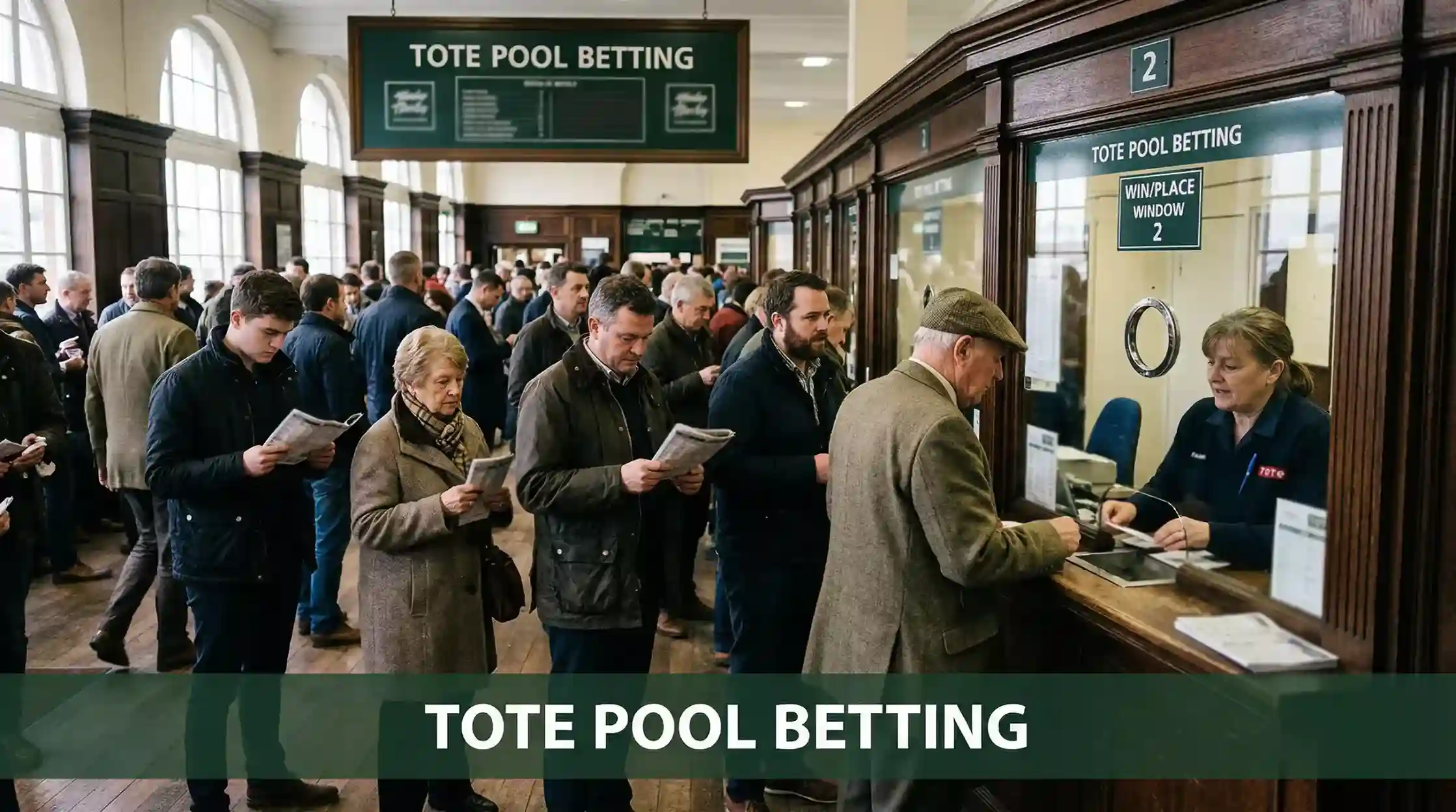
Tote betting offers an alternative to fixed-odds bookmakers through pool-based wagering where punters bet against each other rather than against the house. The system originated in France as pari-mutuel betting and has operated in Britain for nearly a century. Understanding how Tote pools function—and when they offer advantages over traditional bookmakers—expands your betting options and occasionally delivers superior value.
The scale of British racing betting provides context for Tote’s place in the market. According to the Gambling Commission’s 2024-25 Industry Statistics, remote betting gross gaming yield on horse racing reached £766.7 million. The Tote captures a portion of this market through distinctive products that fixed-odds bookmakers cannot replicate, particularly multi-race pools requiring selections across entire meetings.
Pool betting mechanics differ fundamentally from fixed odds. Your return depends on total pool size and how many winning tickets share the dividend—figures unknown until after the race. This uncertainty creates both opportunities and complications that informed punters can navigate profitably.
This guide covers Tote’s main bet types, explains dividend calculation, and outlines strategic considerations for choosing between pool and fixed-odds betting in different circumstances.
Pool Bet Types Explained
The Tote offers various pool products ranging from simple win betting to complex multi-race challenges. Each operates on the same fundamental principle—all stakes go into a pool, the Tote takes a percentage, and the remainder divides among winning tickets—but structures vary considerably.
Tote Win and Place
The simplest Tote bets mirror standard bookmaker offerings. Tote Win pays if your selection finishes first; Tote Place pays for finishing in the places (typically first three in fields of eight or more, first two in smaller fields). Dividends depend on pool distribution rather than fixed odds.
Compare Tote Win dividends to SP when deciding between pool and fixed-odds betting. Sometimes Tote pays significantly better—particularly on outsiders when favourite money dominates bookmaker markets. Other times fixed odds prove superior. The comparison requires post-race verification to identify patterns.
Exacta
The Exacta requires predicting first and second in correct order—equivalent to the bookmaker straight forecast. Pool mechanics can produce dividends that exceed or fall short of Computer Straight Forecast returns depending on how public money distributes across possible combinations.
Combination Exactas allow covering multiple permutations at increased stake cost. Selecting three horses to fill the first two positions in any order requires six unit stakes, matching the bookmaker combination forecast structure.
Trifecta
The Trifecta extends prediction requirements to first, second, and third in exact order. Large-field competitive races generate substantial Trifecta pools and potentially lucrative dividends when unusual finishing orders occur.
Combination Trifectas multiply stakes rapidly. Four horses covering all first-three permutations requires 24 unit stakes. The potential returns can justify this investment when outsiders look capable of hitting the frame.
Placepot
The Placepot challenges punters to find a placed horse in each of the first six races at a meeting. This multi-race format creates engaging accumulator-style betting with place rather than win requirements. Successful Placepot tickets share a pool that grows throughout the day.
The UK represents 26% of European online gambling according to EGBA data, and Placepot popularity reflects British punters’ appetite for multi-race engagement that spans entire meetings rather than individual races.
Placepot strategy involves balancing coverage with stake efficiency. Banking on short-priced favourites in some races allows broader coverage in more competitive events. Perming multiple selections across all six races creates numerous lines that multiply total stakes substantially.
Quadpot
The Quadpot covers the final four Placepot races, offering later starters a condensed version of the same challenge. Smaller pools mean less guaranteed liquidity, but the reduced complexity appeals to punters arriving mid-meeting.
Scoop6
The Scoop6 requires winners (not places) in six nominated races across Saturday’s television coverage. The difficulty of finding six winners generates rollover jackpots that occasionally reach substantial sums. Bonus funds for following-week success add additional appeal.
Scoop6 represents lottery-style betting where small stakes target life-changing returns. The mathematics favour the Tote heavily, but jackpot rollovers occasionally shift expected value toward punters during major accumulations.
Jackpot and Placepot Jackpots
Various jackpot pools accumulate when no tickets successfully complete requirements. These enhanced pools create periodic opportunities where value temporarily shifts toward participants. Monitoring rollover situations identifies when jackpot bets deserve consideration.
Tote vs Fixed Odds Strategy
Choosing between Tote pools and fixed-odds bookmakers requires understanding when each offers advantages. Neither proves universally superior; context determines optimal selection.
When Tote Offers Value
Tote dividends occasionally exceed fixed-odds returns significantly. This occurs most often when public money concentrates on favourites while you back an overlooked runner. The heavily-backed favourite reduces available pool for other outcomes; if your selection wins, fewer tickets share a relatively large pool.
Outsiders in major races frequently deliver better Tote returns than SP. Public perception drives favourite support disproportionately in televised events, skewing Tote pools toward popular selections. Contrarian punters finding unfancied winners capture enhanced dividends.
Exacta and Trifecta pools sometimes outpay CSF and tricast equivalents when finishing orders confound expectations. Pools skewed toward predictable outcomes leave larger shares for unexpected combinations.
When Fixed Odds Prove Superior
Fixed odds offer certainty—you know your potential return before the race. This certainty matters when your selection is likely to attract late support that would reduce Tote dividends. If a horse shortens from 10/1 to 6/1, taking the early fixed price guarantees value the Tote cannot match.
Tote deduction rates also disadvantage pool betting in certain circumstances. The percentage taken before dividend calculation reduces returns systematically. Fixed-odds overround can prove lower than Tote take in some markets, favouring bookmaker betting.
Smaller pools at minor meetings create dividend volatility that works both directions—occasionally spectacular, often disappointing. Fixed odds eliminate this uncertainty for punters preferring predictable outcomes over potential windfalls.
Placepot Approach
Successful Placepot betting balances coverage with stake discipline. Selecting one horse per race creates single-line tickets with maximum exposure to any single failure. Perming two selections in four races and one in two creates 16 lines—broader coverage at 16 times the unit stake.
Identify banker races where strong favourites justify single selections, then invest coverage in competitive events where multiple horses might place. This asymmetric approach concentrates risk where uncertainty is highest while economising on predictable outcomes.
Saturday Placepots at major meetings generate substantial pools with liquidity supporting meaningful dividends. Midweek Placepots at smaller meetings carry lower pools and more volatile returns—approach these differently, perhaps with reduced coverage acknowledging smaller prize structures.
Tracking Tote Value
Compare your Tote returns to equivalent fixed-odds outcomes over time. If Tote systematically outpays on your selection profile, weight pool betting more heavily. If fixed odds consistently prove superior, concentrate bookmaker activity there.
Personal selection style affects this comparison. Contrarian punters backing longer-priced horses may find Tote advantageous. Those following market moves might prefer fixed odds where certainty compensates for potentially lower ceilings.
See also Laying Horses on Betfair.
When Tote Betting Makes Sense
Tote betting complements rather than replaces fixed-odds bookmaker activity. Pool products offer distinctive opportunities—multi-race challenges, potentially enhanced outsider returns, and occasionally superior dividends—that expand your betting options beyond traditional single-race wagering.
Use Tote strategically rather than habitually. Compare anticipated dividends to available fixed odds when both options exist. Target Tote for contrarian selections where public money skews pools favourably. Engage with Placepot and Scoop6 as entertainment with jackpot upside rather than primary betting strategy.
Track your results across both betting methods. Personal data reveals whether your selection style benefits from Tote mechanics or fixed-odds certainty. This evidence-based approach allocates betting activity where your particular approach proves most profitable, whether that favours pools, bookmakers, or strategic combination of both. Tote Betting Explained — More on this topic at live horse racing betting.
