
 Available in US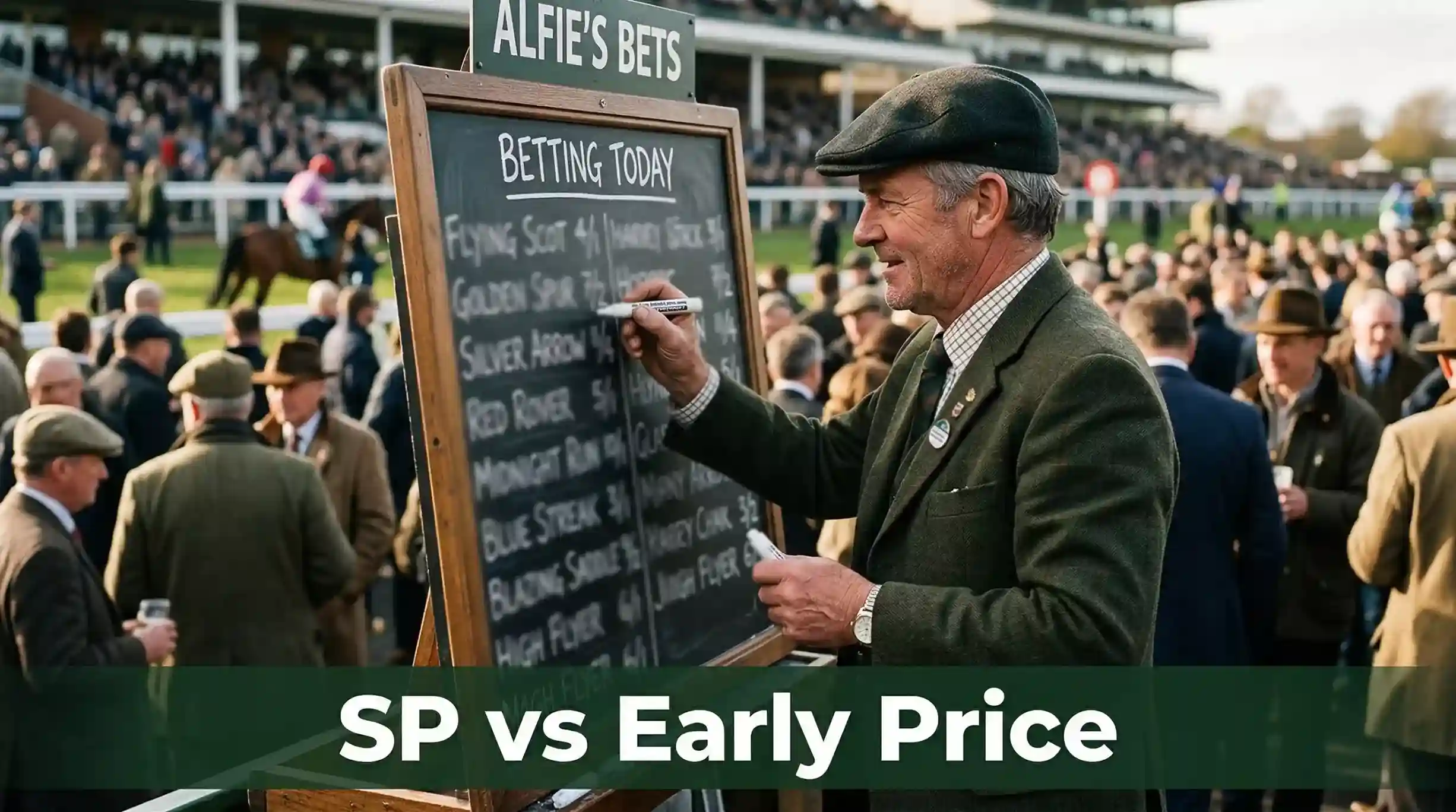
The choice between taking an early price and waiting for SP represents a fundamental betting decision that affects returns over thousands of wagers. Early price betting locks in current odds, protecting you from market contractions but exposing you to potential drift. SP betting guarantees you the official starting price but surrenders control over what that price turns out to be. Neither approach dominates universally—context determines which serves your interests.
Market dynamics have shifted considerably in recent years. The Horserace Betting Levy Board’s 2024-25 Annual Report notes that average turnover per race fell approximately 8% compared to 2023-24, continuing a trend that has seen turnover decline 19% since 2021-22. This reduced liquidity affects how prices form and move, influencing optimal timing for bet placement.
Understanding why prices move—and predicting directional shifts—gives informed punters an edge over those who bet without considering timing. A horse whose price will shorten represents value at current levels; a horse whose price will drift offers better value if you wait. Reading these signals accurately improves long-term returns regardless of selection quality.
Best Odds Guaranteed promotions have reduced the downside risk of early betting for many punters, but BOG does not eliminate the decision’s importance. Knowing when BOG protection is insufficient, and when SP might genuinely exceed early prices, adds sophistication to your market approach.
SP vs Early Price: Key Differences
The Starting Price is determined moments before the race begins, calculated from on-course bookmakers’ odds at the off. Early prices—morning prices, overnight prices, and fixed-odds quotes throughout the day—represent bookmaker assessments at specific prior moments. The gap between these figures can be substantial.
How Starting Price Forms
On-course bookmakers adjust their boards based on money flow and market signals from exchanges and online operators. The SP reflects the final consensus before racing begins. Heavy support during the day typically contracts prices by the off; lack of interest or negative information allows drift.
SP determination aims for fair reflection of betting patterns but can produce surprises. A horse might open at 10/1 in the morning, trade at 8/1 through the afternoon, then return an SP of 12/1 if late money targets other runners. Conversely, a morning 8/1 shot might start at 4/1 after sustained support.
Early Price Advantages
Taking early prices offers several benefits. You lock in odds you consider value before market movement erodes them. If a well-fancied horse opens at 5/1 and you expect support to shorten it, taking 5/1 captures profit that waiting would surrender.
Early betting also provides certainty. You know your potential return before the race, allowing precise staking calculations and bankroll management. SP betting introduces variance that complicates stake planning when precise targets matter.
Information advantages favour early bettors who follow stable information, training reports, and market intelligence. If you identify value before the general market recognises it, early betting crystallises that edge.
SP Advantages
Waiting for SP protects against value traps where early prices prove artificially short. Some horses attract morning support from promotional activity, tipster recommendations, or speculative money that evaporates by race time. If you suspect a selection’s early price reflects hype rather than substance, SP may offer better value.
SP also protects against negative information emerging during the day. A horse that looks well in the morning might disappoint at the races—sweating, reluctant behaviour, or paddock concerns. SP reflects these late factors while early bets remain fixed at pre-information prices.
For punters lacking time to monitor markets, SP provides convenience without requiring constant attention. You select the horse, take SP, and let the market determine fair value at the off.
Market Mover Terminology
Racing discussions use specific terms for price movement. A steamer shortens significantly—10/1 in the morning to 5/1 at the off represents heavy steamer support. A drifter moves the opposite direction, with price expanding as money fails to materialise or targets alternatives.
Market confidence indicators emerge from monitoring these patterns. Consistent steamers from specific yards suggest informed money; consistent drifters from certain sources suggest unreliable information. Tracking these tendencies over time informs your timing decisions.
Levy and Market Economics
The HBLB reported levy yield of nearly £109 million in 2024-25, the highest since 2017 reforms. This revenue derives from betting activity, including both early and SP wagers. Healthy levy figures indicate sustained market participation despite turnover challenges, suggesting sufficient liquidity for meaningful price formation across both timing approaches.
When to Take Each Approach
Optimal timing varies by horse, race, and information context. Developing reliable instincts requires experience, but general principles guide decision-making while you accumulate pattern recognition.
Take Early When
Stable confidence indicators suggest support is coming. If a trainer known for preparing horses meticulously runs a lightly-raced type at a suitable track, market support often follows. Take your price before that support arrives.
The horse represents clear value that the market will recognise. Strong form, favourable conditions, and reasonable pricing invite backing before inevitably shorter odds develop.
You have superior information or analysis. Personal form study revealing overlooked positives should be acted upon immediately—waiting allows the market to correct its error, eliminating your edge.
BOG is available and drift seems unlikely. If Best Odds Guaranteed covers your selection and you see no reason for the price to drift, early betting captures current odds with upside protection. The downside risk effectively disappears.
Wait for SP When
Tipster or promotional activity has inflated early prices. If morning money came from mass recommendation rather than informed backing, SP often exceeds early quotes once that artificial support fades.
Uncertainty surrounds the horse’s condition or attitude. Horses returning from breaks, trying new trips, or racing in unfamiliar conditions present unknowns that paddock inspection and late market moves might clarify. SP captures that late intelligence.
The race involves multiple potential scratching. Competitive races sometimes see late withdrawals that affect remaining odds. SP accounts for actual runners while early prices reflect original field assessments.
Hybrid Approaches
Some punters split stakes between early price and SP, guaranteeing partial exposure to each outcome. A £20 intended stake might become £10 early and £10 SP, hedging timing risk at the cost of optimal positioning in either direction.
Others bet early with plans to add at SP if prices drift favourably. This approach increases total exposure but captures value at both price points when market movement cooperates.
Tracking Your Results
Record whether early prices or SP would have delivered better returns across your selections. Over hundreds of bets, patterns emerge revealing whether your timing instincts are profitable or need adjustment. This data-driven approach beats assumption-based habits.
See also Live Horse Racing Streaming.
Developing Your Timing Strategy
Price timing represents a learnable skill rather than random guesswork. By understanding why prices move and which factors predict direction, you can systematically improve your timing decisions and capture better average odds across your selections.
Start by observing before committing. Watch how prices evolve on races you have opinions about but choose not to bet. Note which early prices improved by the off, which deteriorated, and what factors seemed to drive the movement. This low-risk education builds pattern recognition.
When ready to apply timing strategy, match your approach to your information. Strong conviction backed by solid analysis warrants early betting. Uncertainty about form, fitness, or market reception suggests SP patience. Best Odds Guaranteed tilts the balance toward early betting for covered races, but does not eliminate the need for thoughtful timing consideration. Treat the price decision as seriously as the selection decision—both contribute to long-term profitability. SP vs Early Price — More on this topic at live horse racing betting.
